Learning Outcomes:
i. Define annual rings and explain their significance in determining the age of trees and woody plants.
ii. Describe the process of secondary growth in trees, including the role of the vascular cambium and cork cambium.
iii. Explain how the width of annual rings varies in response to environmental conditions, such as temperature and rainfall.
iv. Analyze the use of annual rings as a tool for dendrochronology, the study of past climate and environmental changes.
v. Discuss the impact of human activities on annual ring formation and the importance of tree preservation.
i. Annual Rings: A Tree's Chronicle of Life
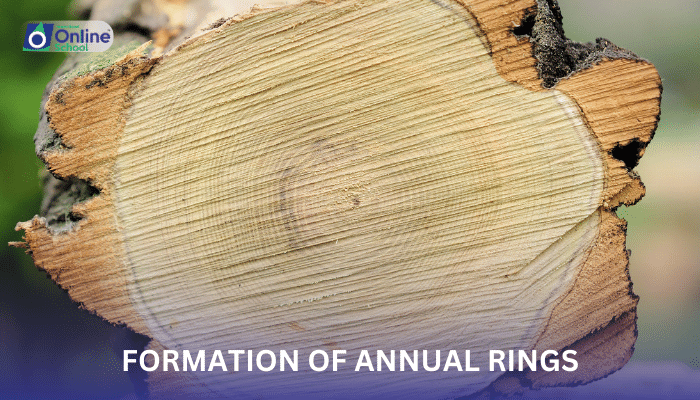
Annual rings, also known as growth rings, are visible concentric rings found in the cross-sections of trees and other woody plants. They serve as a record of the plant's growth and provide clues about environmental conditions during the plant's lifetime.
ii. Secondary Growth: Layering the Tree Trunk
Secondary growth, the increase in girth of trees and woody plants, is driven by the activity of lateral meristems, specifically the vascular cambium and the cork cambium.
Vascular cambium: The vascular cambium produces new secondary xylem and secondary phloem cells. Secondary xylem, also known as wood, forms the bulk of the annual ring and provides structural support. Secondary phloem transports nutrients and organic compounds throughout the plant.
Cork cambium: The cork cambium produces cork cells, which form a protective layer called bark. Cork cells are dead cells with suberized cell walls, protecting the tree from water loss, mechanical damage, and environmental stresses.
iii. Annual Ring Formation: A Tale of Two Seasons
The width of annual rings varies from year to year, reflecting the environmental conditions during the growing season.
Favorable conditions: In years with favorable conditions, such as adequate rainfall and warm temperatures, trees produce more xylem cells, resulting in wider annual rings.
Stressful conditions: In years with stressful conditions, such as drought or extreme temperatures, trees produce fewer xylem cells, resulting in narrower annual rings.
iv. Dendrochronology: Decoding the Past Through Tree Rings
Dendrochronology is the study of tree rings to reconstruct past climate and environmental changes. By analyzing the width and characteristics of annual rings from multiple trees, scientists can infer patterns of temperature, rainfall, and other environmental factors over long periods.
Clues from ring width: Wider rings indicate favorable growing conditions, while narrower rings suggest stressful conditions.
Variations in ring characteristics: Variations in the density, color, and patterns of annual rings can provide additional information about past environmental events, such as volcanic eruptions or insect infestations.
v. Human Impact on Annual Ring Formation
Human activities can have a significant impact on annual ring formation. For instance, pollution, deforestation, and climate change can alter the growth patterns of trees and affect the accuracy of dendrochronological records.
vi. Importance of Tree Preservation
Trees play a crucial role in maintaining healthy ecosystems and providing various benefits to humans, including oxygen production, carbon sequestration, and climate regulation. Preserving trees is essential for protecting biodiversity, ensuring the availability of resources, and mitigating the impacts of climate change.
Annual rings serve as a valuable record of a tree's life and provide insights into past environmental conditions. Dendrochronology, the study of tree rings, has helped scientists reconstruct past climate patterns and understand the impact of human activities on the environment. By appreciating the significance of annual rings and recognizing the importance of tree preservation, we can better manage our forests and ensure a sustainable future.
